
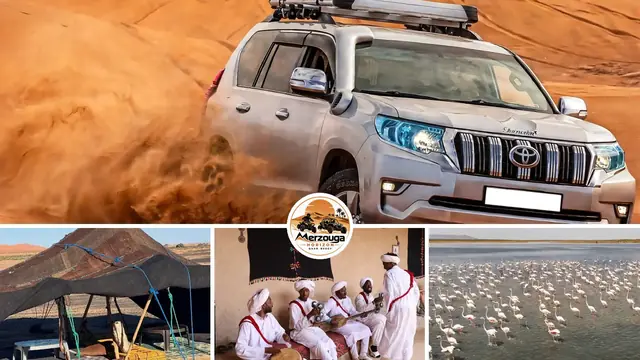
Merzouga 4x4 Desert Tour
Nomads, fossils and Gnawa music in Khamlia on a 3 hour desert tour by 4x4.
From€40View Details
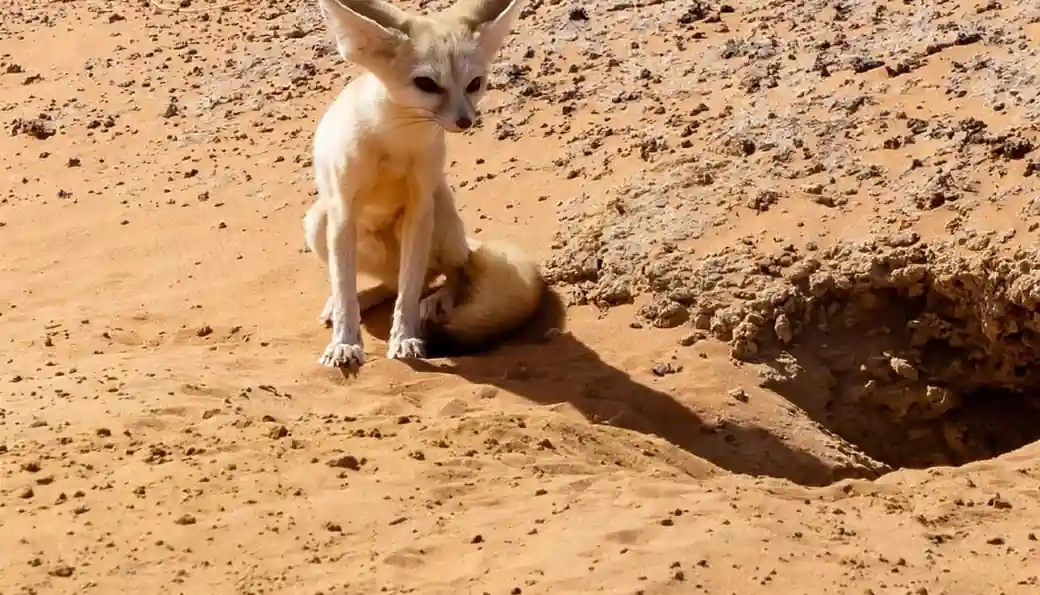
Merzouga wildlife · Desert birds · Erg Chebbi
Fennec foxes, desert birds, flamingos and tracks in the sand: the hidden life of the dunes.
The Sahara is far from empty. This guide to Merzouga wildlife introduces the animals of the Erg Chebbi area: the fennec fox and other small mammals, the desert birds that bring birdwatchers from around the world, the water birds of Merzouga lake, reptiles and insects, and how to see them responsibly.
At first sight the dunes look empty, but look closely in the early morning and you will find tracks everywhere: the zig-zag of a beetle, the hops of a small rodent, the prints of a fox. Most desert animals are active at night or at dawn and dusk, and rest in burrows or shade during the heat of the day. Around Erg Chebbi, the palm gardens, the stony hamada and, after rain, Merzouga lake add very different habitats.
| Animal | Notes |
|---|---|
| Fennec fox | The smallest fox in the world, with enormous ears; common throughout the Sahara but shy and mostly seen at night, if at all |
| Gerbils | Small desert rodents such as the Lesser Egyptian Gerbil, recorded around Erg Chebbi |
| Bats | Species such as the Trident Leaf-nosed Bat and Kuhl's Pipistrelle hunt insects around lights at night |
| Camels and goats | Not wild, but you will see the herds of nomad families everywhere |
Merzouga is famous among birdwatchers, because several species that are hard to find elsewhere live around the dunes. Birders visiting the area have recorded:
| Bird | Where and when |
|---|---|
| Desert Sparrow | Around camps and settlements at the edge of the dunes |
| Egyptian Nightjar | Roosting on the ground by day, perfectly camouflaged; local help needed to find one |
| Hoopoe Lark | On the stony plains around the dunes |
| Cream-coloured Courser | Running across the hamada |
| Crowned and Spotted Sandgrouse | Coming to drink at waterholes in the early morning |
| Desert Warbler | In low bushes on the desert plains |
| Fulvous Babbler | In palm oases of the region |
Local tip: the best birding is in spring (March to May) and autumn, early in the morning. Bring binoculars.
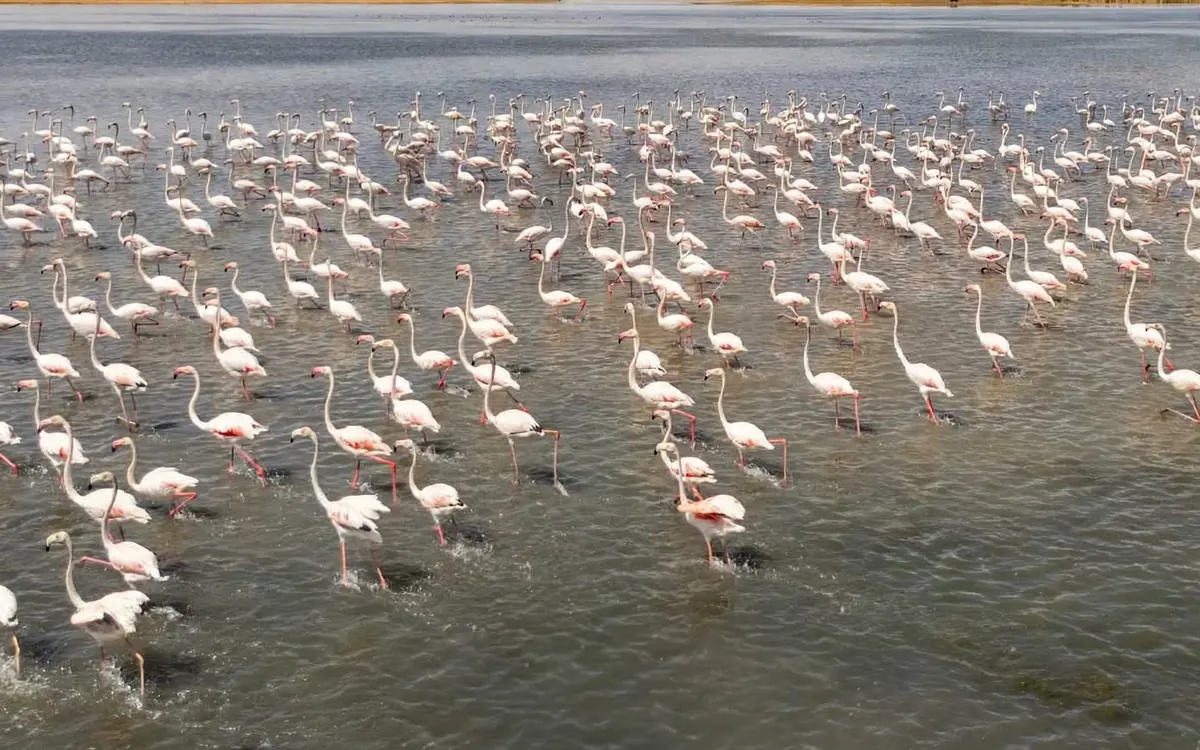
When Merzouga lake (Dayet Srij) fills after rain, it becomes a stopover for water birds crossing the Sahara. Birders have recorded greater flamingos, ruddy shelducks, avocets, little egrets, several kinds of waders and gull-billed terns there. The lake is often dry for long periods, so ask us before your trip whether it holds water.
| Animal | Notes |
|---|---|
| Geckos | Such as Anderson's Short-fingered Gecko, active at night |
| Fringe-fingered lizards | Fast lizards with special toes for running on sand |
| Beetles | Their tracks cover the dunes every morning |
| Scorpions and snakes | Present in the desert but rarely seen; they avoid people |
Our 4x4 desert tour crosses several habitats in 3 hours, and a night in the camp gives you dawn in the dunes.
Prices on this page are our own published prices. Distances and travel times are approximate. Last reviewed: November 2026.
Related Experiences
Nomads, fossils and Gnawa music in Khamlia on a 3 hour desert tour by 4x4.
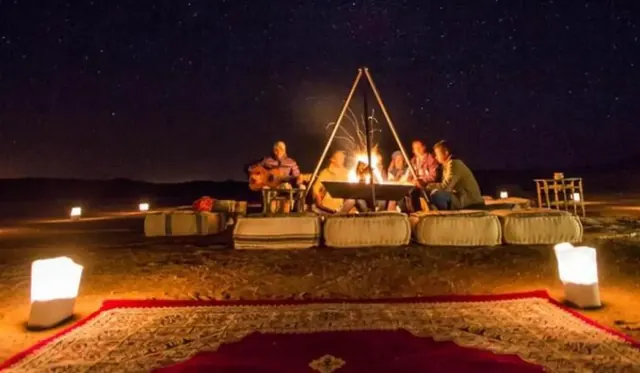
One night at a luxury camp in the Erg Chebbi dunes, with dinner, music by the fire and sunrise.
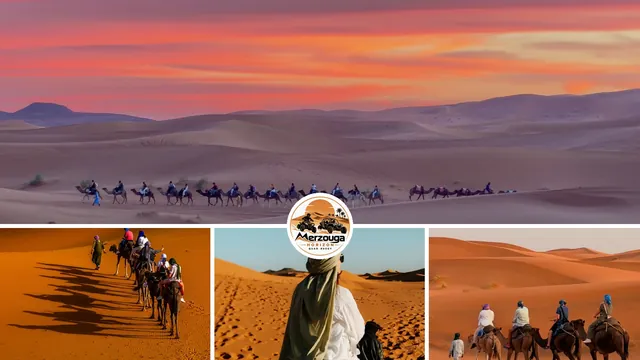
Ride slowly into the dunes at sunset or sunrise, the classic Sahara experience.
Frequently Asked Questions
Fennec foxes live throughout the Sahara, but they are shy and mostly active at night, so sightings are rare. Look for their tracks in the morning.
Yes. Desert species such as the Desert Sparrow, Egyptian Nightjar, Hoopoe Lark and Cream-coloured Courser are found around Erg Chebbi.
Yes, at Merzouga lake (Dayet Srij) when it fills after rain. The lake is often dry, so ask us before your trip.
They live in the desert but are rarely seen. Wear closed shoes at night, use a torch and do not turn over stones.
At sunrise, when animals are active and tracks are fresh. Spring and autumn are best for birds.