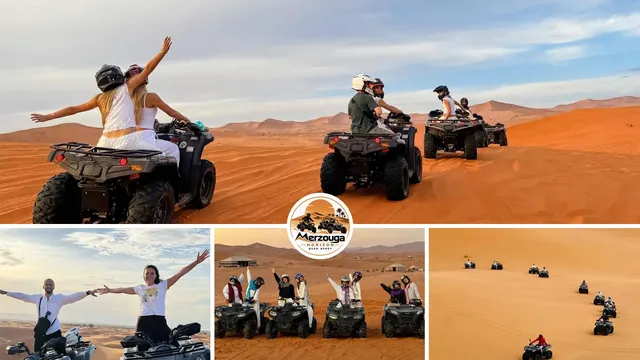
Quad Biking in Merzouga
Your own quad and the open dunes: ride Erg Chebbi with a local guide.
From€30View Details
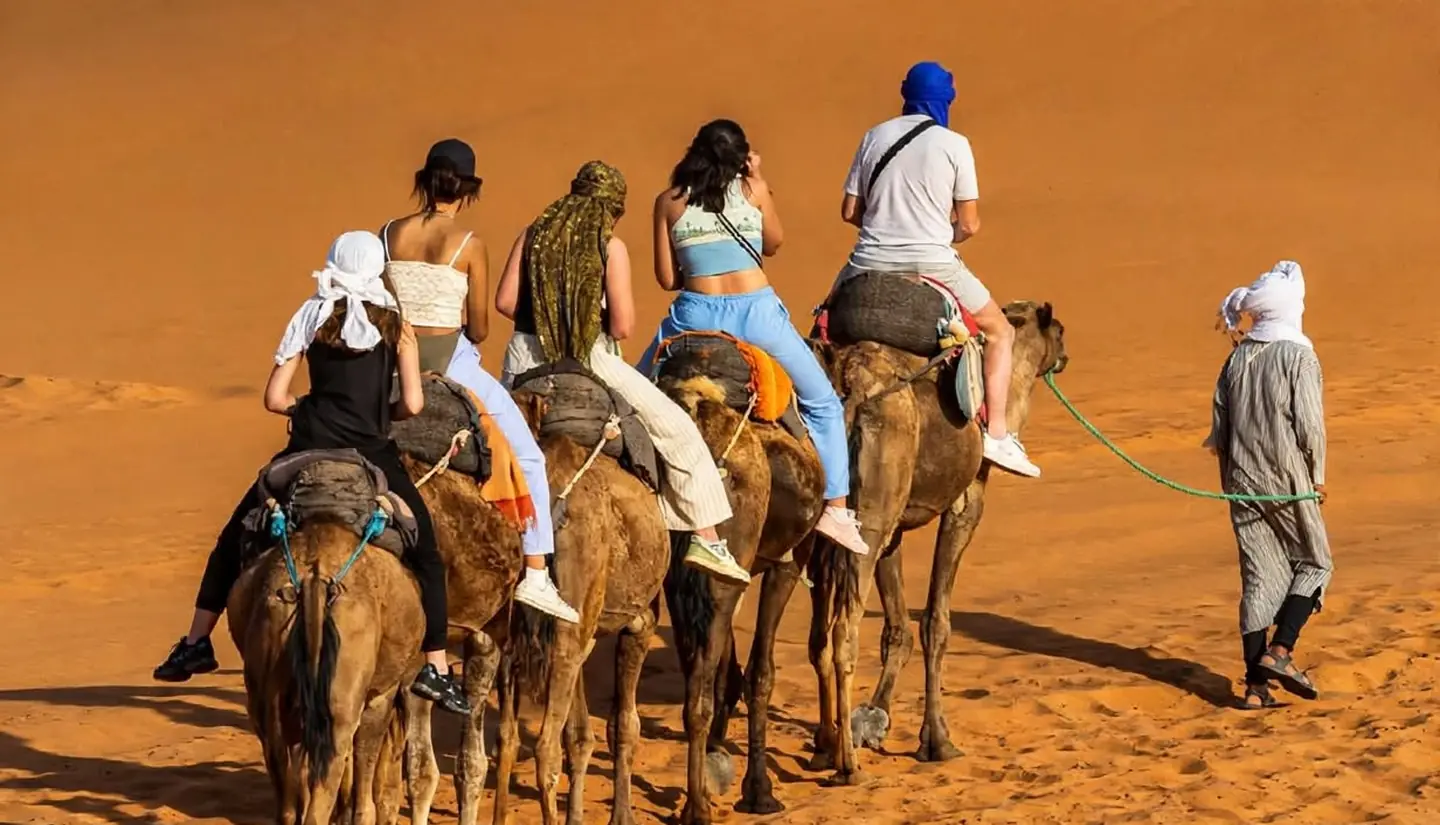
What to wear · Packing list · Sahara desert
Sun by day, cold at night, sand when it is windy: what to wear in the Sahara and what to pack for Merzouga.
Not sure what to wear in the Sahara Desert? In Merzouga you need clothes for strong sun by day, cold nights for half the year and blowing sand on windy days. This guide tells you what to wear by season and by activity, how to dress respectfully, and gives you a complete Merzouga packing list, with a packing list for each season and what to take for a night in a desert camp.
| Season | By day | Evening and night | Sunrise |
|---|---|---|---|
| Winter (Dec to Feb) | Long trousers, long sleeves, light jacket | Warm coat, hat, warm layers | Very cold: coat, hat, gloves |
| Spring (Mar to May) | Light long sleeves and trousers | Sweater or light jacket | A warm layer |
| Summer (Jun to Aug) | Light, loose, covering clothes, wide hat | Light clothes; nights stay warm | Light layer |
| Autumn (Sep to Nov) | Light long sleeves and trousers | Sweater or light jacket | A warm layer |
Temperatures by month are in our Merzouga weather guide.
| Activity | Wear | Avoid |
|---|---|---|
| Quad and buggy | Closed shoes, long trousers, scarf or buff, sunglasses; we give you a helmet | Sandals, loose scarves that could catch |
| Camel ride | Long, comfortable trousers; a layer for sunset or sunrise | Short skirts and shorts (the saddle rubs) |
| Horse riding | Long trousers, closed shoes | Flip-flops |
| Sandboarding | Clothes you don't mind filling with sand | Anything with sand-catching pockets |
| Night in a camp | Warm layers, comfortable shoes for the dunes | Heavy suitcases |
Merzouga is a traditional, mostly Muslim area. Covering shoulders and knees is respectful in the villages, at Khamlia and when visiting nomad families, and it also protects you from the sun. In the dunes, on rides and at the hotel pool, normal holiday clothes are fine.
Clothes
Desert essentials
Bag and tech
Health
The basics above work all year. What changes from season to season is how much warmth you need at night and how much protection you need from the sun and wind. Add these to your bag for the month you travel:
Winter packing list (December to February)
Spring packing list (March to May)
Summer packing list (June to August)
Autumn packing list (September to November)
For the temperature month by month, see our Merzouga weather guide; to choose your month, the best time to visit Merzouga.
Local tip: whatever the season, pack layers rather than one heavy coat. A day in the desert can go from hot sun to a cold, windy sunrise within the same 24 hours.
For a night in a desert camp, leave your big suitcase at your hotel or in the vehicle and take a small bag: a warm layer, a toothbrush, a torch, your charger, sun cream and something to sleep in. If you arrive by camel, a small backpack is much easier to carry. Ask us where to leave your luggage when you book.
Local tip: sand gets into everything. Keep your phone in a zip bag and your camera in a closed bag when you are not using it, and change lenses only inside.
Prices on this page are our own published prices. Distances and travel times are approximate. Last reviewed: November 2026.
Related Experiences
Your own quad and the open dunes: ride Erg Chebbi with a local guide.
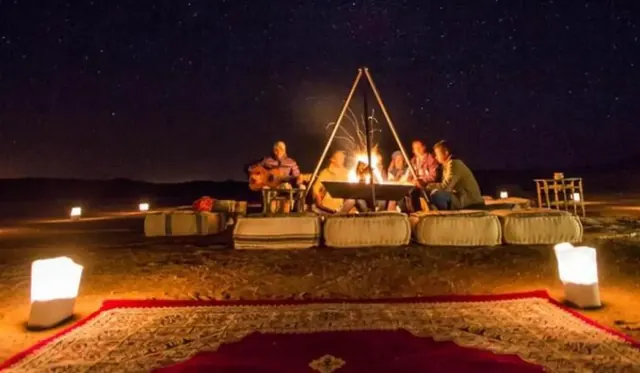
One night at a luxury camp in the Erg Chebbi dunes, with dinner, music by the fire and sunrise.
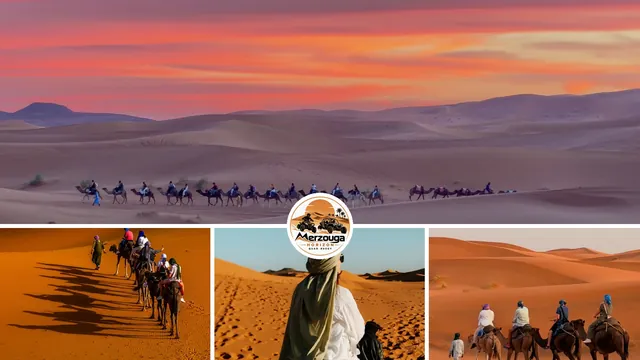
Ride slowly into the dunes at sunset or sunrise, the classic Sahara experience.
Frequently Asked Questions
Loose, light clothes with long sleeves and long trousers, closed shoes, a scarf or buff, sunglasses and a hat by day, and warm layers for the evening and night.
From December to February, yes: nights average 4 to 7°C. In spring and autumn evenings are cool; in summer nights stay warm.
Closed shoes, long trousers, a scarf or buff and sunglasses. We give you a helmet.
In the dunes and at your hotel, yes. In the villages and when visiting families, covering knees and shoulders is more respectful.
A small bag with a warm layer, a torch, your charger, sun cream, sunglasses and a toothbrush. Leave big suitcases at your hotel or in the vehicle.
A warm coat, hat, gloves and scarf for cold nights and sunrise (nights average about 4 to 7°C), warm layers for the camp, and a light jacket for sunny days.
Very light, loose, covering clothes, a wide hat, high-factor sun cream, sunglasses and a large water bottle. Nights stay warm, so a light layer is enough.
Light long clothes, a sweater for evenings, and a scarf or buff with sunglasses: spring is the windiest season.