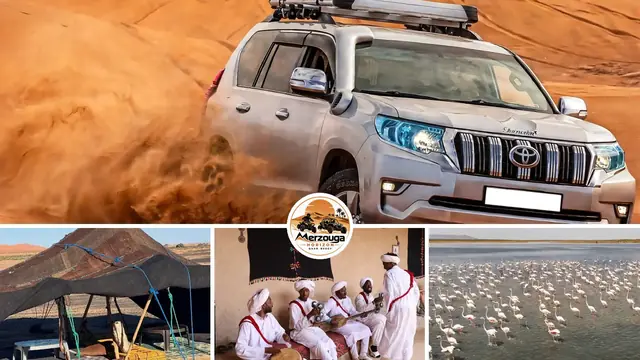
Merzouga 4x4 Desert Tour
Nomads, fossils and Gnawa music in Khamlia on a 3 hour desert tour by 4x4.
From€40View Details
Amazigh culture · Berber culture Sahara
Language, music, food and hospitality: the Amazigh culture you meet in the Merzouga desert.
The desert around Merzouga is Amazigh land. This guide to Amazigh culture in Merzouga explains who the Amazigh (Berber) people are, the Tamazight language and its Tifinagh alphabet, Yennayer, the Amazigh New Year, the culture you will see on your trip and how to travel respectfully.
The Amazigh (plural Imazighen), often called Berbers, are the Indigenous people of North Africa. They lived in Morocco long before the arrival of the Arabs, and Amazigh language and culture remain at the heart of Moroccan life today, especially in the mountains and the south. Around Merzouga, Amazigh families, including the Ait Atta, have lived from herding, oasis farming and trade for centuries.
Many Amazigh people prefer the name Amazigh, which is often translated as "free people", to "Berber". You will hear both in Morocco.
Morocco's 2011 constitution made Tamazight an official language of the kingdom, alongside Arabic. It is written in its own ancient alphabet, Tifinagh, which you will see on road signs and public buildings next to Arabic and French. In 2001 Morocco created the Royal Institute of Amazigh Culture (IRCAM) to protect the language, culture and script.
| Tamazight | Meaning |
|---|---|
| Azul | Hello |
| Tanmirt | Thank you |
| Amazigh | The Amazigh people; often translated as "free person" |
Local pronunciations vary from region to region; your guide will be happy to teach you more.
Yennayer, the Amazigh New Year, falls in mid-January. In 2023 it was made an official national holiday in Morocco, and it was celebrated officially for the first time in January 2024. Families mark it with a special meal and gatherings.
| Part of culture | Where you see it |
|---|---|
| Hospitality and mint tea | In every hotel, camp and nomad tent |
| Music and drums | Around the fire at the desert camp, and Gnawa music in Khamlia |
| Earth architecture | The old ksour (fortified villages) and kasbahs of the region |
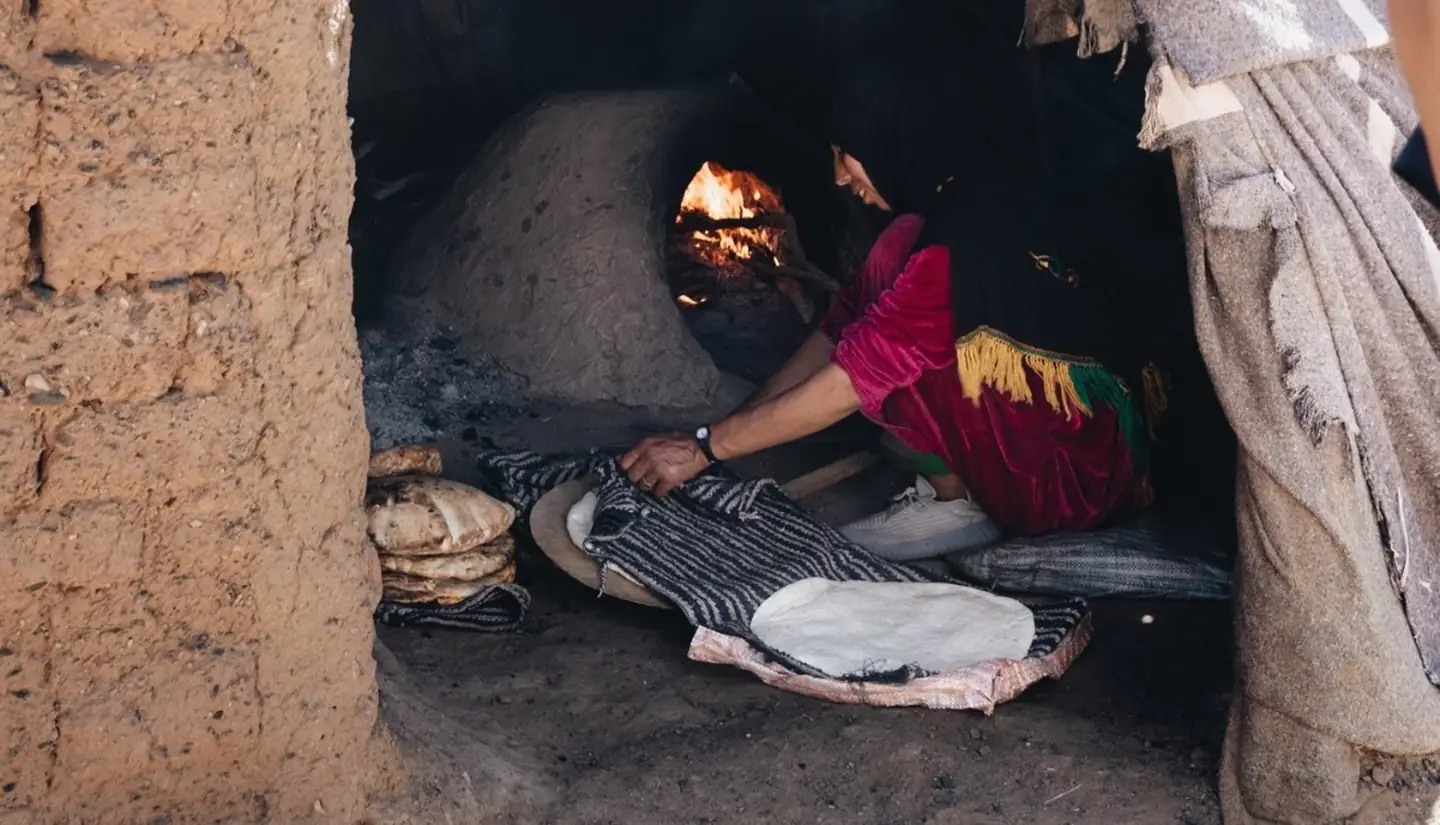
| Food | Medfouna (Berber pizza), tagine, couscous and bread |
| Clothing | The long scarf (cheich) worn against sun and sand, and the djellaba |
| Herding and nomad life | Families with their animals on the hamada around the dunes |
Read more in nomad life around Merzouga, Khamlia and Gnawa music and Merzouga food.
You may see the Amazigh flag, with horizontal bands of blue, green and yellow and a red symbol in the middle. The symbol is the Tifinagh letter yaz (ⵣ), often described as the image of a free person. The colours are commonly explained as the sea, the land and the desert.
Prices on this page are our own published prices. Distances and travel times are approximate. Last reviewed: November 2026.
Related Experiences
Nomads, fossils and Gnawa music in Khamlia on a 3 hour desert tour by 4x4.
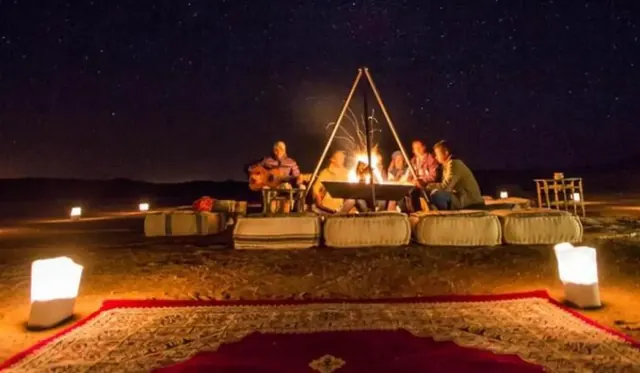
One night at a luxury camp in the Erg Chebbi dunes, with dinner, music by the fire and sunrise.
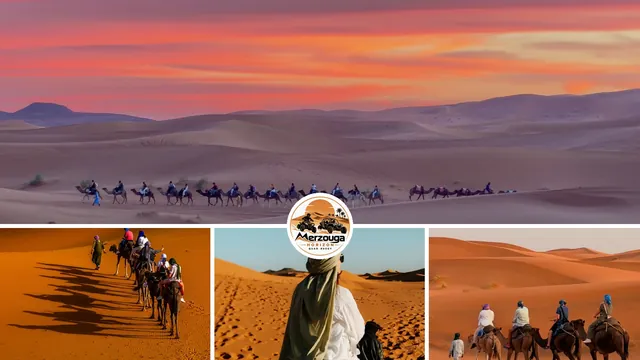
Ride slowly into the dunes at sunset or sunrise, the classic Sahara experience.
Frequently Asked Questions
Yes, both names describe the Indigenous people of North Africa. Many prefer "Amazigh".
Yes. Morocco's 2011 constitution made Tamazight an official language, alongside Arabic.
The alphabet used to write Tamazight. You see it on road signs and public buildings in Morocco.
In mid-January. It became an official national holiday in Morocco in 2023 and was first celebrated officially in January 2024.
"Azul". To say thank you, "tanmirt".